Global Investments in Ag Start-Ups Fell in 2016

Reuters writer Karl Plume reported yesterday that, “Global investments in agriculture technology startups fell 30 percent in 2016 as investor interest in companies offering drones and satellite-guided farm machines cooled following the biggest capital inflow ever a year earlier, according to a study released on Tuesday.

“Still, the number of deals grew 10 percent from 2015 to a record 580, and the $3.23 billion invested by venture capitalists and others was the second highest annual total on record for the sector, according to the annual report from food and agriculture investment platform AgFunder.

“The pullback outpaced declines in the broader global venture capital market. Weak commodity prices have dragged U.S. farm income to the lowest in seven years, while sales have slumped for industry leaders such as equipment maker Deere & Co and seedmaker Monsanto Co.”

Mr. Plume noted that, “Funding for drones and robotics companies, bioenergy and food e-commerce businesses slowed, while crop biotechnology and farm management tools experienced an uptick, AgFunder data showed.”

The Reuters article added that, “Some investors may be waiting for large M&A deals such as the Dow Chemical and DuPont merger and Bayer AG’s takeover of Monsanto Co to be finalized before making large bets, [AgFunder CEO Rob Leclerc] said.”

Posted in Agriculture Law, Start-up Company Law | Comments closed

California Moving to Put Cancer Warning on Roundup Label

Associated Press writer Scott Smith reported last week that, “California can require Monsanto to label its popular weed-killer Roundup as a possible cancer threat despite an insistence from the chemical giant that it poses no risk to people, a judge tentatively ruled Friday.

“California would be the first state to order such labeling if it carries out the proposal.

“Monsanto had sued the nation’s leading agricultural state, saying California officials illegally based their decision for carrying the warnings on an international health organization based in France.”

The AP article noted that, “Monsanto attorney Trenton Norris argued in court Friday that the labels would have immediate financial consequences for the company. He said many consumers would see the labels and stop buying Roundup.

“‘It will absolutely be used in ways that will harm Monsanto,’ he said.

“After the hearing, the firm said in a statement that it will challenge the tentative ruling.”

Mr. Smith pointed out that, “Fresno County Superior Court Judge Kristi Kapetan still must issue a formal decision, which she said would come soon.

“California regulators are waiting for the formal ruling before moving forward with the warnings, said Sam Delson, a spokesman for the state Office of Environmental Health Hazard Assessment.

“Once a chemical is added to a list of probable carcinogens, the manufacturer has a year before it must attach the label, he said.”

Posted in Agriculture Law | Comments closed

Company Developing On-Farm Ethanol Plants

Nat Williams reported on Saturday at Illinois Farmer Today Online that, “A handful of farmers are not just raising the crops that can be used as biofuels.  They’re also working on producing the fuel itself.

“A Minnesota-based company is in the developmental stage of offering small-scale production of ethanol and other end-products right on the farm.”

The article explained that, “The company [Easy Energy Systems], manufactures modules that can be linked to build ‘micro biorefineries’ right on the farm. Feedstocks include corn, grain sorghum, sugar beets and unharvested waste products, such as fruits and vegetables.”

“[Mark Gaalswyk, who works for the company]  said the company’s engineers are testing 47 different feedstocks to determine feasibility of manufacturing various end-products. One project involving the manufacture of n-butanol is being tested on the Iowa farm of Harry Stine, founder of Stine Seeds. He said another project is being tested with cooperation of the Koch brothers, billionaire entrepreneurs and owners of Koch Industries.

“Easy Energy is also working with Iowa State University on cellulosic technology. The company will soon begin building initial modules that convert feedstocks into sugar water and then into n- butanol.”

Mr. Williams added that, “Not surprisingly, building an ethanol plant — even a small one — is not cheap. It can take an investment of $20 million. But sales manager Tom Gallagher pointed out that a farmer can raise the money by a combination of sources that includes grants and leveraged money.”

Posted in Agriculture Law | Comments closed

New Websites Look at Farmland Values, But Some See Limitations

Des Moines Register writer Donnelle Eller reported recently that, “Iowa farmland is the state’s biggest asset, worth an estimated $215 billion.

“But getting information on buying, selling or renting farmland is a lot harder than the handful of clicks that let you get a wealth of home values on the internet.

“Now, new websites are popping up to provide information about Iowa ag land values, based on data such as recent sales, soil composition and productivity.”

Ms. Eller stated that, “Among those with Iowa ties: What’s My Farm Worth? by Peoples Co., California-based AcreValue and Terva, a startup created by an Iowa State University student.”

The Register article noted that, “Steve Bruere, president of Peoples Co., a Clive farmland broker and management business, wanted to look at how the company could use technology to better help Iowa farmers value their land.

“It launched What’s My Farm Worth? more than a year ago, building on profitability data developed by partner AgSolver. The Ames company helps farmers use detailed data to determine their most and least profitable acres to make better management decisions.”

The article added that, “Now, most farmland value data is based on surveys, such as reports from Iowa State University and the Iowa Chapter Realtors Land Institute.

“What’s My Farm Worth?, a free service, calculates a value based on a five-year corn price, average yield by county and soil type, rental value and other factors.”

“The farmland values can be used for sales, but it also can be helpful for farmers and landowners negotiating farmland rents,” the Register article said.

Nonetheless, recall that a BartellPowell update earlier this month pointed to a DTN article that discussed some of the potential issues associated with these Online programs: “Another problem which is hard for computers to differentiate are nuances which can affect land values significantly, [Dennis Reyman, an accredited appraiser in Storm Lake, Iowa] adds. ‘Since land rarely trades hands, it takes a long view of sales history and neighborhood influences to understand these things. The human appraiser not only uses his eyes but also his ears to know how recent economics might be affecting demand in the neighborhood.”

Posted in Agriculture Law | Comments closed

Brazil, Mexico- With Large Internet Markets, Eyed for Start-Up Opportunities

New York Times writer Vinod Sreeharsha reported last week that, “With a change of administration in the United States ushering in uncertainty, this may be an unusual time for an American investment firm to bet on emerging markets.

“Yet San Francisco-based Rise Capital, founded by Nazar Yasin, a former director at Tiger Global Management, sees some of the next big internet companies coming from Latin America, in particular Brazil and Mexico.

“After investing in multiple countries in the region in recent years, Rise, for the first time, has backed an internet start-up in Colombia.”

The Times article pointed out that, “Mr. Yasin said Rise continued to see promising opportunities in the region and expected to make more investments this year despite some of its countries’ ailing economies and uncertainty stemming from President Trump’s policies.”

“The region’s start-up scene has also been through ups and downs over the last several years, but the entrepreneurship wave continues,” the article said.

Last week’s article stated that, “[Peter Ostroske, a co-founder of OFI and its chief executive] said OFI, which was previously backed by another Silicon Valley early-stage investment firm called 500 Startups, planned on using the new capital to expand, and not only in Colombia.

“‘We have a very robust operation in Colombia, but it needs to be developed in Mexico,’ he said. He expects that over the next 12 months, ‘my focus will be on developing the Mexico City office,’ he added.

“That opportunity is a big reason that Rise invested, Mr. Yasin said. ‘Brazil and Mexico are two of the largest internet markets in the world right now, and there’s still little venture capital there,’ he added.”

Posted in Start-up Company Law | Comments closed

Farm-to-Table in Wintertime

Associated Press writer Lisa Rathke reported yesterday that, “Demand driven by the farm-to-table movement knows no seasons, so farmers in colder areas of the country increasingly use greenhouses and similar structures to meet wintertime demand for local produce.

“While crusty snow and ice covers the ground in January in Vermont, spinach leaves sprout in rows of unfrozen soil inside a high tunnel — a large enclosure covered by plastic film that is warmed by the sun and protected from the wind.”

The AP article noted that, “The federal government helped spur the growth in winter farming by providing financial and technical assistance to farmers to install high tunnels to extend the growing season, protect crops from harsh conditions, reduce energy use and improve air quality by reducing the transportation of food. Between 2010 and 2016, the U.S. Department of Agriculture’s Natural Resources Conservation Service helped producers construct more than 15,000 high tunnels around the country, with Alaska having the most.”

Recall that earlier this month, the Omaha World-Herald reported on local food access in wintertime around the Omaha metro area, click here for details.

Posted in Agriculture Law | Comments closed

“Sweat Equity” as Compensation in a Farming Operation

A recent update at the farmdoc daily blog by Michael Langemeier (“Should Sweat Equity be Used to Compensate a Returning Family Member?“) noted that, “[S]weat equity may arise when an on-farm heir is paid less than their true opportunity cost to work for the business and/or the business has grown substantially due to the abilities and efforts of the on-farm heir. Let us look at these two items one at a time. Suppose a returning family member has the opportunity to work for a local retailer that with benefits would pay them $75,000 per year. The farm is currently not able to match this offer. Instead of a $75,000 salary with benefits, the farm is willing to pay the returning family member a salary and benefit package of $50,000 per year.”

“Sweat equity also occurs when the business has grown substantially, at least partially as a result of, the abilities and efforts of the returning family member. To motivate our discussion, let’s assume that the farm purchased and rented additional land when the family member returned to the farm. Owned land is a major asset of U.S. farms accounting for approximately 84 percent of total assets. The returns to land include operating income and appreciation. To capture appreciation the land would have to be sold. Obviously, this often not feasible or prudent. Sweat equity can be used to capture land value appreciation that occurs when land is purchased to accommodate the returning family member. If the older generations helped purchase the land, not all of the land value appreciation would accrue to the returning family member.”

Dr. Langemeier pointed to an example for analysis and indicated that, “In this example, Mom and Dad want to keep the farm in the family. The youngest of three children, Michael, came back to the farm in 1990. Unfortunately, if the farm business was divided into three equal pieces, it would not be of an adequate size to create a viable farm business for Dad, Mom, and Michael. When Michael came back to the family farm in 1990, the fair market value of the business (i.e., owner’s equity) was $420,000. At that time, Mom and Dad agreed that the contribution of each child up to 1990 was equal. Dividing the $420,000 by three results in a contribution of each child of $140,000. Today’s fair market value of the business is $1,680,000. If we divide by three, $560,000 would be left to each child. However, the contributions of the three children have not been equal since 1990. There were very few promises made to Michael when he returned to the farm. However, decisions were made because he came back (e.g., land was rented and purchased). Mom, Dad, and Michael know that his contribution to the family farm has resulted in Michael developing a sizable investment in ‘sweat equity‘ in the farm business.”

The farmdoc update noted that, “After careful consideration, Mom and Dad decided that they would equally divide the 1990 value of the farm business between the three children. They also decided that Michael was responsible for 50 percent of the farm growth since 1990 (value of business grew from $420,000 to $1,680,000 or $1,260,000). Table 1 outlines the resulting equity distribution in the estate plan. At this point, Mom and Dad want to establish procedures for how the equity would be split. The amounts presented will likely be changed to reflect future changes to the farm’s equity position. A couple caveats should be noted. First, it is often difficult to determine how much ‘sweat equity’ contributed to the increase in the value of the business. Second, the level of Michael’s annual compensation is an important consideration when valuing ‘sweat equity.’ If Michael was paid something close to his opportunity cost when he returned to the farm, the computations in table 1 would likely be different.”
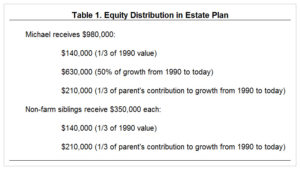
Table 1, from the farmdoc daily blog, January 13, 2017.

Table 1, from the farmdoc daily blog, January 13, 2017.

Dr. Langemeier added that, “On profitable farms with an increasing owner’s equity over time, using sweat equity to recognize the contributions of a returning family member has a place. However, if a farm is not profitable or large enough to compensate someone returning to the farm, the use of sweat equity if extremely problematic.”

Posted in Agriculture Law | Comments closed

WOTUS Cases on Hold, U.S. Supreme Court to Review Venue Issues

DTN writer Todd Neeley reported yesterday that, “The U.S. Court of Appeals for the Sixth Circuit in Cincinnati has put the legal fight on the waters of the United States, or WOTUS, rule on hold pending a review by the U.S. Supreme Court, according to an order handed down Wednesday.

“The U.S. Supreme Court last week granted a request to hear a legal challenge by the National Association of Manufacturers and other plaintiffs as to whether the appeals court is the proper venue for a number of lawsuits filed against the rule. That appeals court ruling had led to more than 100 cases being consolidated in the Sixth Circuit. Although the high court granted the petition, the case does not get to the merits of the rule itself.

“On Monday, the plaintiffs asked the appeals court to put the cases on hold, especially in light of the Trump administration’s recent actions on federal regulations. Earlier this week, the administration issued a regulations freeze.”

Mr. Neeley noted that, “Farm groups have been closely monitoring the legal challenges to the controversial rule change to the Clean Water Act, which the groups see as a major expansion of EPA authority. At least 30 states and multiple industries have sued in cases across the country.

“The Sixth Circuit has placed the rule on hold nationally. A number of lawsuits were filed in district courts across the country.”


Posted in Agriculture Law | Comments closed

Optimistic Outlook on Illinois Agriculture

Tim Mitchell reported yesterday at the News-Gazette (Champaign, Il) Online that, “Illinois Farm Bureau Vice President David Erickson is optimistic about the future of agriculture in the state.

“‘I like our prospects,’ Erickson said. ‘There has been a little bit of a downturn in commodity prices, but I think it provides us farmers an opportunity to sharpen our management skills.'”

Mr. Mitchell noted that, “Erickson said he sees lots of potential for growth in Illinois agriculture.

“‘I think our biggest advantage is that we have quite a bit of diversity,’ Erickson said. ‘We have excellent land, an opportunity for livestock growth, pretty good infrastructure and a food industry that adds value to our commodities.'”

The News-Gazette article added that, “But Erickson added that he has some concerns about the Trump administration’s effect on trade.”

In his first week in office, President Trump has indicated that the U.S. intends to renegotiate the North America Free Trade Agreement with Mexico and Canada- two of the three largest export destinations for U.S. agricultural exports.

And President Trump has also withdrawn the U.S. from negotiations within the Trans-Pacific Partnership (TPP) agreement.  A successful TPP could have potentially increased U.S. exports by 5% (USDA estimate), while some farm groups estimated the TPP could have added an additional $4.4 billion to the U.S. ag sector annually.

Posted in Agriculture Law | Comments closed

Proposed Swine Facility Halted in Illinois After Opposition

Gary Marx and David Jackson reported yesterday at the Chicago Tribune Online that, “Facing opposition from local farmers, one of the state’s largest pork producers has pulled its application to build a hog confinement in downstate Fulton County, handing opponents a rare victory in their efforts to slow the growth of the massive livestock facilities in the state.

“The hog producer, an affiliate of Professional Swine Management, formally withdrew its notice of intent to construct from the Illinois Department of Agriculture last week after sustained protests from neighbors who feared that waste from the proposed 20,000-hog confinement could foul rivers and creeks, and that the operation might ruin roads and jeopardize their rural way of life.”

The article noted that, “The decision to cancel Memory Lane Acres [the name of the proposed facility] is not the only recent setback for Professional Swine Management, which over the years has withstood periodic opposition from local residents and environmental groups to install 27 hog operations in Illinois, Iowa and Missouri with a total of more than 120,000 sows.

“In nearby Bernadotte Township, the company’s Runway Ridge facility, a proposed 20,000-hog confinement located on farmland near the famed Spoon River, also has stalled in the face of opposition.”

Yesterday’s article added that, “Past efforts in Illinois to toughen the livestock facilities law stalled in the face of strong opposition from rural lawmakers backed by farm and livestock associations.

“But Karen Hudson, co-founder of Illinois Citizens for Clean Air & Water and a longtime critic of confinements, said she hopes the balance of power may be shifting as more local farmers join environmentalists in opposing the livestock facilities.

“‘We have a growing number of Farm Bureau farmers who are being affected and who are stepping forward,’ Hudson said.”

Posted in Agriculture Law | Comments closed
